Weight Loss With Limited Mobility: Build the Plan Around You
A respectful guide to nutrition, adapted movement, muscle protection, and medical options when walking or standard workouts are not realistic.
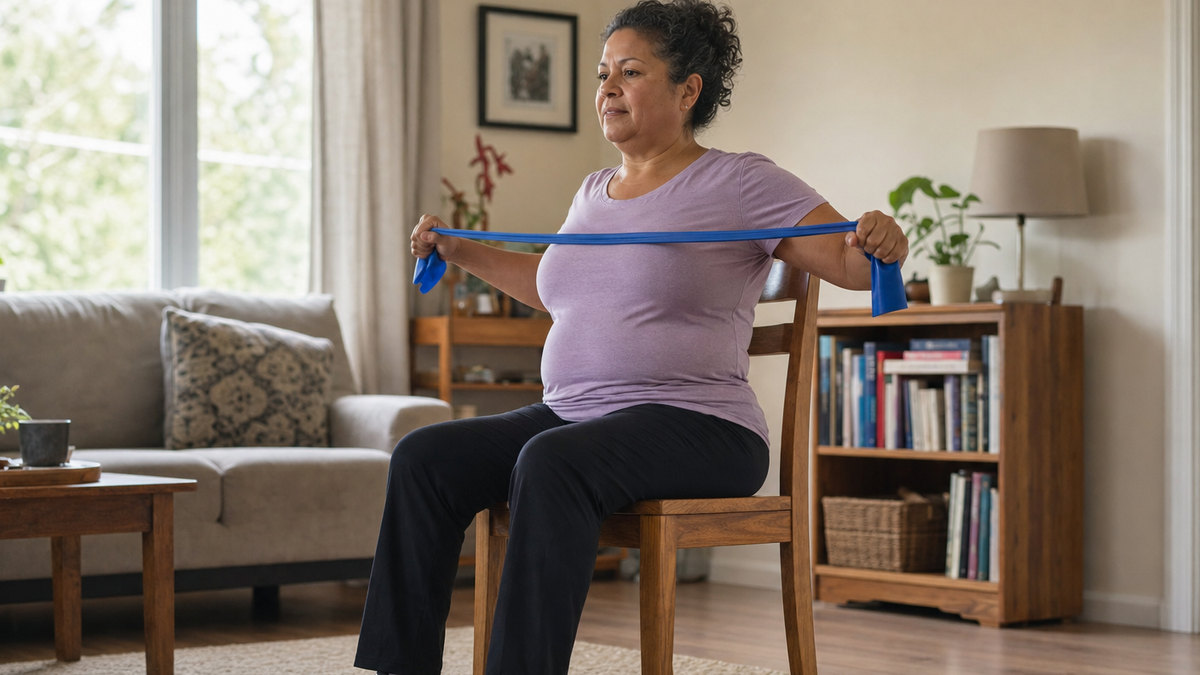
Yes, a weight-loss plan can be built around limited mobility. You do not have to walk, stand, or complete a standard workout to deserve care or to begin making progress. Physical activity is one part of treatment, not a test of effort. A thoughtful plan can combine nutrition, movement that fits your abilities, sleep and symptom review, medication when appropriate, and follow-up that protects strength and daily function. Results vary, and no responsible plan can promise a particular number on the scale.
Limited mobility is a planning fact, not a character judgment
Limited mobility is not one diagnosis. Pain, fatigue, balance, strength, endurance, breathing, equipment, transportation, and assistance needs can look very different from one person to another. Access matters too. An inaccessible gym, a kitchen that is hard to use, or a grocery trip that requires more energy than someone has are real barriers, not signs of poor motivation. A peer-reviewed review of disability and weight-related barriers describes how health, environment, food access, and available resources can all shape a person's options.
That is why the starting question is not how to force a conventional program. It is what can be made safe, useful, and sustainable in your actual day. Respect also includes language. The right term is the one a person prefers for themself.
The federal activity target is a benchmark, not an entry test
The current CDC guidance for adults with chronic conditions or disabilities says that people who are able should aim for at least 150 minutes of moderate aerobic activity each week and muscle-strengthening activity on 2 days. The broader HHS Physical Activity Guidelines give a range of 150 to 300 minutes of moderate activity, or 75 to 150 minutes of vigorous activity, plus strengthening on at least 2 days for adults who are able.
Ready to start?
$199 Skeptics' Trial, see if it works for you
One-time $199 trial with physician evaluation and, only if a prescription is approved and the dispensing pharmacy can fulfill it for the patient's location, one month of compounded semaglutide; the pharmacy confirms packaging and shipping details before fulfillment. No long-term commitment. Standard care starts with a $119 physician review; medication is separate, and compounded semaglutide programs start at $166/month.
Start the 30-day trialThe next sentence matters just as much as the target. When an adult cannot meet those amounts, federal guidance says to do regular physical activity according to their abilities and to avoid inactivity when possible. The target is not a requirement for receiving respectful weight care, and activity does not have to happen in one long session. Smaller bouts count. Some activity is better than none.
Movement can be adapted in more than one direction
Walking is only one form of aerobic activity, and standing with weights is only one form of strengthening. The CDC lists options such as wheelchair rolling, hand cycling, swimming or water activity, adapted yoga, resistance bands, machines, and handheld weights. Depending on a person's abilities and setting, seated movement or an adapted sport may also fit. These are possibilities, not a prescription.
- Start with access. Choose an option that can be reached, set up, and repeated without creating a new barrier.
- Match the movement to the day. Pain, fatigue, balance, and endurance can change, so the plan may need more than one version.
- Build gradually. A short, tolerable session can be a better starting point than a large weekly goal.
- Use qualified help when needed. A clinician, physical therapist, occupational therapist, or qualified activity specialist can help with equipment, transfers, fall risk, symptoms, and safe progression.
No one should be told to push through warning symptoms or copy a condition-specific routine from the internet. The useful dose and type of activity depend on the person, and sometimes the safest first step is an assessment rather than a workout.
Nutrition does not become less important when movement is limited
A weight-management eating plan usually needs to lower energy intake while still providing enough nutrition. That balance can become harder when appetite is low, meals are difficult to prepare, or chewing, swallowing, nausea, constipation, or other symptoms limit food choices. A practical plan may focus on nutrient-dense foods that are accessible and tolerated, with a protein source, produce or another fiber-rich food, and fluids as appropriate for the person's medical needs.
Protein deserves attention because substantial weight loss can include loss of both fat and lean tissue. Lean mass measured on a scan is not the same thing as skeletal muscle or physical function, so alarming claims that every person will lose a fixed percentage of muscle are not accurate. A 2025 joint nutrition advisory for GLP-1 therapy recommends attention to nutrient adequacy, protein, and resistance activity. A systematic review of enhanced protein intake during weight loss found evidence that additional protein can help maintain muscle mass and physical function in some adults with overweight or obesity.
That does not create one protein number for everyone. The appropriate amount depends on age, body composition, current intake, medical history, kidney or liver function, food tolerance, and goals. A clinician or registered dietitian can help set a target that is adequate without turning a general recommendation into an unsafe rule.
Protect strength and function, not just lean mass on a scan
Resistance activity may help preserve lean mass and strength during weight loss, but some lean tissue may still be lost. A systematic review of resistance exercise during dietary weight loss supports benefits for body composition and strength. The form of resistance can be adapted. Bands, a machine, a handheld weight, body position, or assistance may all change the task, but the right choice depends on safety and ability.
Progress is broader than the scale. Useful measures can include energy, appetite, hydration, strength, endurance, ease with daily tasks, and, for some people, transfers or use of mobility equipment. A change in pain, dizziness, falls, food intake, or function deserves attention even if weight is moving in the hoped-for direction. Weight loss may not resolve pain or mobility limitations.
Medication can be discussed without making mobility a verdict
Limited mobility by itself does not automatically rule weight-loss medication in or out. Current FDA prescribing information for semaglutide used for obesity treatment and tirzepatide used for obesity treatment does not list limited mobility itself as a contraindication. That fact does not establish that either medication is appropriate for a particular person.
A licensed clinician still needs to review diagnoses, current medicines, contraindications, symptoms, nutritional risk, and goals. Medication does not remove the need to protect food intake, hydration, strength, and function. It also should not turn a standard exercise plan into a condition of care when that plan is not feasible. Direct drug-trial evidence in the broad population described as having limited mobility is limited, so it would be wrong to promise equal results. Individual results vary. Never start, stop, or change a prescription without the prescriber who knows your history.
A better plan begins with better questions
An adaptive care conversation can begin with a few practical questions:
- Which movements are safe, accessible, and realistic for me now?
- What could be adapted if pain, fatigue, balance, or endurance changes?
- How will we monitor protein, overall nutrition, fluids, strength, and daily function?
- Could a medication or another condition affect appetite, digestion, dizziness, or fall risk?
- Which outcome matters most to me besides the scale?
The point is not to lower the quality of care because mobility is limited. It is to improve the fit. A plan that respects your body, your environment, and your priorities can still be structured and medically serious. The most useful next step is often small and specific: one accessible food change, one tolerable movement option, or one clinical conversation that removes a barrier.
Frequently asked questions
Can I lose weight if I cannot walk or do standard exercise?
Yes, weight-management care can be adapted when walking or standard workouts are not possible. Nutrition, sleep, symptom management, medication when appropriate, and ability-matched movement can all be part of the plan. Physical activity supports health and function, but it is not a test of motivation or a requirement to deserve care. A specific result cannot be promised, and the safest plan depends on your health, abilities, and daily environment.
Do I have to complete 150 minutes of activity each week?
No. The federal target is a benchmark for adults who are able to meet it. The same guidance says that adults who cannot reach the full amount should be regularly active according to their abilities and should avoid inactivity when possible. Shorter bouts count. A clinician or qualified activity specialist can help translate that guidance into a realistic plan when pain, balance, fatigue, breathing, transfers, or fall risk affect what is safe.
What kinds of exercise can work with limited mobility?
Possibilities include wheelchair rolling, hand cycling, water activity, adapted yoga, resistance bands, machines, handheld weights, and seated or adapted sports. The list is not a prescription, and walking is not the only valid option. The right choice depends on your abilities, symptoms, equipment, access, and safety. A physical therapist, occupational therapist, clinician, or qualified activity specialist can help adapt the setup and progression.
How much protein should I eat while losing weight?
There is no single protein target that is right for everyone. Needs vary with age, body composition, current intake, kidney or liver function, food tolerance, and clinical goals. Adequate protein may help support lean mass and function during weight loss, but some lean tissue may still be lost. A clinician or registered dietitian can set a practical target and help find foods that fit your appetite, access, and medical needs.
Can a GLP-1 medication be an option if my mobility is limited?
Possibly. Limited mobility alone does not automatically determine eligibility, but it also does not prove that a medication is safe or appropriate for you. A licensed clinician must review your medical history, current medicines, contraindications, symptoms, nutritional risk, and goals. Direct trial evidence across the many causes of limited mobility is limited, so equal results cannot be promised. Results vary, and medication should be paired with individualized nutrition, monitoring, and movement as your abilities allow.
This article is informational only and not medical advice. Speak with a licensed physician before starting or changing any GLP-1 therapy. Individual results vary. New Hope Weight Loss is a physician-supervised medical weight loss clinic in Costa Mesa, CA. Eligibility for treatment is determined during the medical consultation. Compounded semaglutide and compounded tirzepatide are not the same products as Wegovy®, Ozempic®, Mounjaro®, or Zepbound®.